How to Regrow Green Onions
Green onions, also known as scallions or spring onions, are tasty and useful. They can make any dish better. Do you know you can let them regrow at home? This saves money and guarantees you always have fresh green onions. I’ll show you how in this expert step-by-step guide. Soon, you’ll have crisp, tasty green onions any time you want.
Key takeaways
- Regrowing green onions at home is a simple and cost-effective way to have a fresh supply of this flavorful vegetable on hand.
- Choose fresh green onions with intact roots for successful regrowth.
- You can regrow green onions in water or soil, indoors or outdoors, depending on your preference and available space.
- Green onions can be stored in the refrigerator or frozen for later use.
- Enjoy the benefits of a sustainable kitchen by regrowing your own green onions and reducing food waste.
Why Regrow Green Onions?
Regrowing green onions is great for the planet and saves you money. You can regrow them in water or soil. It works well indoors, in a small pot, or in your garden. Regrowing green onions is simple and needs just a little effort.
By regrowing green onions, you help the environment and live more sustainably. It’s a smart choice for several reasons. Let’s dive into them:
1. Regrow in Water or Soil
You get to choose how to regrow green onions, in water or soil. Growing them in water is easy and popular. Just put them in a glass or jar with water. Soon, you’ll see new green shoots.
Planting them in soil is another good option, indoors or outdoors. This way can last longer and supports their growth better.
2. Regrow Indoors or Outdoors
Regrowing green onions gives you more choice on where to grow them. Even if you live in a small space, like an apartment, it’s possible. You can use a sunny windowsill to get enough light for them to grow.
If you do have outdoor space, take them outside. This lets them get fresh air and natural light. It helps keep them healthy and strong.
3. Regrow in a Pot or a Garden
You don’t need a lot of space to regrow green onions. By using a pot, you can grow them even in a small apartment. They do well in small spaces and still give you a lot.
Having a garden is great for growing more green onions. It means you can have a lot more for all your meals. Plus, you’ll have your own fresh supply whenever you need it.
Regrowing green onions is a great activity. It’s easy and eco-friendly. Start now, in water or soil, indoors or outdoors. You’ll see the benefits quickly.
“Regrowing green onions is a sustainable and cost-effective way to ensure a continuous supply of fresh greens.”
Methods of Regrowing Green Onions
| Regrowing Method | Advantages | Disadvantages |
|---|---|---|
| Water | – Easy and convenient – Allows for observing the regrowth process |
– Requires regular water changes – Limited growth space |
| Soil | – Provides sustainable growth – Can produce larger and longer-lasting harvests |
– Requires suitable soil and space – More maintenance compared to water method |
| Indoors | – Suitable for small living spaces – Convenient access to fresh greens |
– Limited natural light – Potential for pests in indoor environments |
| Outdoors | – Benefits from natural sunlight and fresh air – More room for green onions to flourish |
– Dependent on outdoor conditions and climate |
| Pot | – Space-saving option – Suitable for small-scale regrowth |
– Limited growth space and yield |
| Garden | – Allows for larger-scale regrowth – Provides continuous supply for multiple harvests |
– Requires a dedicated garden space |
| Container | – Suitable for limited space – Can be moved and placed in optimal growing conditions |
– Limited growth space and yield |
Choosing Fresh Green Onions
When picking fresh green onions, remember a few important things. You want the best to succeed at regrowing and to taste the freshest. Here’s how to choose the perfect green onions:
- Look for clean and white bulbs: Make sure the bulbs are clean and white. This shows they are fresh. Don’t choose ones with dark spots.
- Check the root system: Fresh green onions have their roots. They should look like they were just picked.
- Examine the middle stalk: The middle part of the stalk should be dry and clean. Stay away from slimy or dark green tips.
- Assess the firmness of the bulb: The bulb should be firm. A soft bulb means it’s not fresh and may not regrow well.
Follow these steps to buy green onions perfect for regrowth. Picking the right green onions is key for a steady supply of tasty greens.
| Advantages of Choosing Fresh Green Onions | Disadvantages of Choosing Stale Green Onions |
|---|---|
| – Higher chance of successful regrowth | – Low chance of regrowth |
| – Fresher taste | – Wilted and less flavorful |
| – Better texture | – Slimy or soggy texture |
“Choosing fresh green onions is crucial for successful regrowth. The quality of the bulbs, root system, middle stalk, and firmness of the bulb all play a role in determining whether the green onions will regrow well. By selecting the freshest green onions, you set yourself up for a bountiful supply of homegrown greens.”
Storing Green Onions
When you want to store green onions, you have a few options. You can keep them in the fridge or on the countertop. Doing it right will keep your green onions tasty and crunchy.
Storing Green Onions in the Refrigerator
To store green onions in the fridge:
- First, cut off the root ends.
- Next, choose a glass or jar with a wide bottom and enough height for the onions.
- Fill the container with water to cover the roots.
- Now, put the green onions in, roots first.
- Top with a loose plastic bag for a greenhouse effect.
- Remember to change the water every few days.
Doing this can keep your green onions fresh for two to three weeks. This way, they’re always ready to be used.
Storing Green Onions on the Countertop
For a different approach, you can store green onions on the countertop. Here’s how:
“Keeping green onions on the countertop changes their flavor and texture. And they look nice in the kitchen, too!” – Amateur Chef Emily
- Start by cutting off the root ends.
- Then, wrap them in a damp paper towel.
- Put them in a cool, airy spot on your countertop.
- Avoid places with direct sun or heat.
- Make sure the paper towel stays damp.
With this method, green onions can stay fresh for up to one week. It keeps them handy for cooking.
A Handy Tip: Freezing Green Onions
Got lots of green onions? Freezing is a great way to keep them. Wash and dry, chop to the size you want, then store in an airtight container or a bag. Use them in dishes like soups before six months for the best taste.
| Storage Method | Duration |
|---|---|
| Refrigerator with water | 2-3 weeks |
| Countertop with damp paper towel | Up to 1 week |
| Freezing | Up to 6 months |
Pro tip: Try freezing chopped green onions in ice cube trays with water or oil. Then you can just use a cube whenever you want to add flavor.
Freezing Green Onions
Freezing green onions is possible but they might get soggy and lose shape after thawing. Yet, if you’ll use them in stuff like soups, it’s fine. Freezing helps keep their taste.
Here’s how to freeze green onions:
- First, wash them well to get rid of dirt.
- Then, dry them completely with a towel or some paper.
- Cut them into thirds, tossing out any bad parts.
- Now, get a sheet pan and cover it with parchment paper.
- Spread the onions evenly on the pan.
- Finally, freeze them until they’re solid. This usually takes a few hours.
- After that, move them to a freezer bag or container. Remember to mark the date on the bag.
- Keep the frozen green onions in the freezer. They stay good for up to six months.
To use frozen green onions, take the amount you need from the freezer. Then, thaw them in the fridge or add straight to your dish. Remember, they might be a bit softer, but they’ll still taste good.
Including an image of frozen green onions can help illustrate the process and enhance the visual appeal of the article.
By freezing green onions, you make them last longer. This is great if you grow them yourself or find a good deal. Freezing is a smart way to keep from wasting and always have some on hand for cooking.
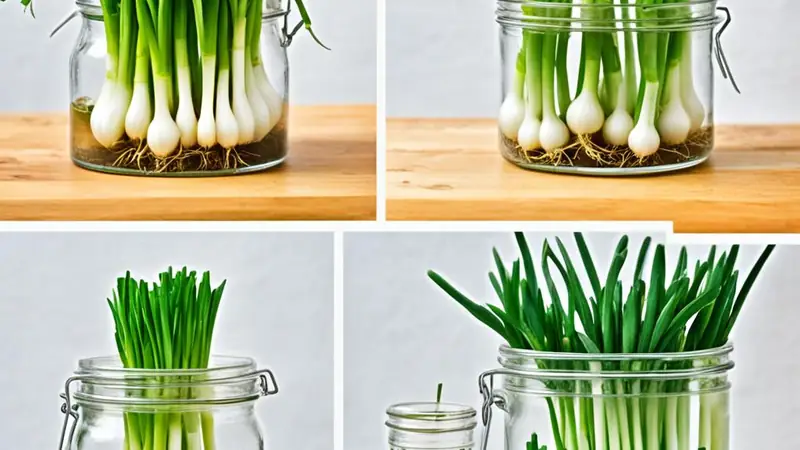
Regrowing Green Onions in Water
Growing green onions in water is super easy. After cooking with the green parts, save the white base. With some green still on it, this part can regrow.
Use a glass or jar filled with water. Make sure the roots of the green onion base are covered. Put this in a bright spot away from direct sunlight.
Remember to change the water often to keep the onions healthy. Each week, pour out the old water and add new water. This helps the onions get the food and air they need to grow.
Soon, you’ll see new green shoots. They will get longer if you take good care of them. When they are a few inches tall, you can pick and eat them.
To harvest, cut the green shoots at the base. Leave a little green. Now, you can add these fresh greens to your cooking.
This method gives you a fresh supply of green onions. It’s good for the planet and keeps a key ingredient always ready for your meals.
Tips for Regrowing Green Onions in Water:
- Choose a tall enough glass or jar for the green onion shoots.
- Put it in a spot with bright, but not direct, sunlight.
- Change the water every week to keep the onions healthy.
- Watch for rot. Remove any bad parts quickly.
- Pick the green shoots when they’re a few inches long for the best taste.
With these easy steps and tips, fresh green onions are always within reach.
Regrowing Green Onions in Soil
To keep regrown green onions going, try planting them in soil. It’s a smart way for them to keep growing so you always have fresh green onions. You can harvest them more than once and enjoy them whenever you like.
You can plant them in many spots, like inside or outside, in a pot or right in the ground. Just be sure they get what they need to stay healthy.
Planting in a Pot Indoors
If space is tight or you fancy an indoor garden, a pot is perfect for regrowing green onions. Here are the steps:
- Pick a pot with holes at the bottom for good drainage.
- Use soil that drains well, stopping about an inch from the top.
- Separate the onion roots gently.
- Make a hole in the soil.
- Put the green onion in the hole and cover it with soil, keeping the green part out.
- Lightly water the soil to make it damp.
- Put the pot in a spot with a lot of sunlight, like a window that gets sun for 6-8 hours.
- Water the onion when the soil dries out a little, but not too much.
Planting Outdoors in a Garden Bed
Have a garden space? Use it to grow green onions. You can have lots of onions this way. Here’s what to do:
- Find a sunny place that gets sun all day for 6 hours.
- Get the soil ready by clearing it of weeds and making it loose.
- Make shallow grooves in the soil.
- Untangle the onion roots gently.
- Put the bulbs in the grooves, leaving space of about 2-3 inches between each.
- Cover the bulbs with soil, leaving the green shoots out.
- After planting, water the soil well and keep it damp.
- Watch out for weeds and other plants that might take nutrients away from your onions.
Cut the green tops as you need them. This helps them grow again, so you always have some to use.
No matter if you plant in a pot inside or in a garden outside, light, water, and some care are key to keeping them growing. You’ll enjoy fresh green onions for a while.
Reproducing Green Onions from Seeds
For garden lovers like me, growing green onions from seeds is exciting. It means I don’t have to always buy them from stores. I can plant seeds from my own green onions. This lets me always have fresh, home-grown green onions. I’ll show you how to do it!
- Harvesting the Dried Flowers: Start by waiting for your green onions to flower. As the flowers dry up and turn brown, they’re ready to be picked.
- Removing the Black Seeds: After picking the flowers, carefully take out the black seeds. Remember, these seeds are very tiny. Handle them gently to not break them.
- Storing for Future Planting: Keep the green onion seeds in a dry, safe place like a paper envelope. You can use them next time you plant. This keeps your garden full of green onions.
It takes time to grow green onions from seeds, so be patient. They need months to produce seeds. But, waiting pays off. Plus, young green onions have a slightly different taste, making meals special.
If you love gardening and want a fun project, try planting green onions from seeds. It’s a great way to always have fresh green onions from your garden.
Using Regrown Green Onions
Regrown green onions work well in many recipes, whether you like them raw or cooked. They offer a slighter taste than regular onions. This makes them great for making your dishes taste better.
They are excellent as a topping. Cut them thinly and sprinkle them on salads, soups, or deviled eggs. This adds a nice flavor.
If you like making tasty meals, use these onions. Add them to stir-fries or sautés. They give a light onion flavor without taking over the taste.
For baking fans, try them in quick breads or savory muffins. Mix finely chopped onions with the dough. Your baked goods will have a hint of savory and smell great.
In sauces and stocks, they are key. Use them in mirepoix for better soups, stews, or sauces. They spread their delicate taste, improving the dish.
“Regrown green onions are a versatile ingredient that can be used in various dishes. Their milder flavor makes them perfect for garnishes, stir-fries, baking, and enhancing the taste of sauces and stocks.”
Remember, regrown onions might be less soft than new ones. Adjust how much you use and how long you cook them. Also, try them in different dishes. This will help you enjoy cooking with regrown green onions more!
| Recipe | Description |
|---|---|
| Green Onion Pancakes | A savory and crispy pancake made with regrown green onions, flour, and seasonings. |
| Roasted Green Onion Dip | A creamy dip with a rich onion flavor, perfect for dipping chips, veggies, or spreading on sandwiches. |
| Green Onion Chicken Stir-Fry | A quick and easy stir-fry dish packed with tender chicken, fresh veggies, and regrown green onions for a burst of flavor. |
| Green Onion and Cheese Quiche | A flavorful quiche made with regrown green onions, cheese, eggs, and cream, baked in a buttery crust. |
| Green Onion Potato Salad | A refreshing and tangy potato salad with regrown green onions, mayo, mustard, and herbs. |
Here are some recipe ideas to inspire you:
- Green Onion Pancakes
- Roasted Green Onion Dip
- Green Onion Chicken Stir-Fry
- Green Onion and Cheese Quiche
- Green Onion Potato Salad
Cooking with regrown green onions is a fun way to add taste and freshness to your meals. With these recipes, you’ll find many ways to use them.
The Benefits of Regrowing Green Onions
Regrowing green onions is great for saving money and the planet. It cuts your grocery spending and fights food waste. What’s more, you’ll always have fresh greens for tasty meals right within reach.
It’s also a cool way to learn about plants. Kids and anyone into growing things will enjoy this. Seeing green shoots grow sparks curiosity, teaching about saving our planet and being responsible.
“Regrowing green onions is not only a cost-effective way to have fresh greens but also a fun and educational activity the whole family can enjoy.” – Chef Emma
Anyone can do it, indoors or outdoors. Whether in soil or water, they are easy to grow. Plus, green onions are very hardy and need little care.
Using them in cooking makes dishes tastier and more colorful. They’re not as strong as other onions, fitting well in many meals. Use them to decorate or flavor up your favorite foods.
Benefits of Regrowing Green Onions:
- Save money on groceries
- Reduce food waste
- Have a constant supply of fresh greens
- Engage in a fun and educational activity
- Teach sustainability and responsibility to children
- Adapt to various spaces and environments
- Enhance the flavor and freshness of your dishes
Regrowing green onions is more than just practical. It’s about valuing your food and the Earth. This small step can improve your cooking, health, and the environment in big ways.
| Benefits of Regrowing Green Onions |
|---|
| Save money on groceries |
| Reduce food waste |
| Continuous supply of fresh greens |
| Fun and educational activity |
| Teach sustainability to children |
| Adaptable to various spaces |
| Enhance the flavor of dishes |
Can I Regrow Other Vegetables?
Regrowing vegetables can be easy and good for the planet. You can do more than just green onions. Many veggies can grow again from scraps. For instance:
- Lettuce: After eating a head, save the bottom. Put it in water. Soon, new leaves will spring up.
- Celery: Don’t throw out the end of a stalk. Place it in water. It’ll grow new leaves.
- Carrot Tops: Keep the green tops. Put them in a dish with water. They’ll grow back.
These are only a start. There are lots more you can try. This not only cuts down on waste. It also lets you eat fresh veggies for free.
Benefits of Regrowing Vegetables from Scraps
Regrowing veggies is good for the earth. It makes you more self-sufficient. Plus, it uses up food scraps, cutting waste.
By growing from scraps, you can:
- Save money on food.
- Help the planet by wasting less food.
- Enjoy gardening and get closer to nature.
- Show kids how they can help the environment.
Next time you cook, save your scraps. You can turn them into new veggies. It’s a fun way to reduce waste and enjoy fresh food!
Tips for Successful Regrowth
Regrowing green onions is easy and good for the planet. Anyone can do it at home. Just follow these tips for success:
Choose Fresh Green Onions
Pick green onions with roots and white bulbs still attached. Ensure the stalk is clean and not wilted. Fresh green onions are key to regrowth success.
Store Green Onions Properly
To keep green onions fresh, store them right. If growing in water, use a bottom-heavy glass. Change the water weekly to avoid mold. For the fridge, cover them loosely and change the water every few days.
Provide Adequate Sunlight and Moisture
Place your onions in soil where they get plenty of sun, 6-8 hours daily. Keep the soil moist but not soaked. They do best in well-drained soil.
Harvest and Use the Greens
Cut the greens when they’re a few inches long, leaving the bulbs. Use a sharp knife or scissors. They’re great in many dishes for added taste.
Follow these tips for a fresh green onion supply. Choose fresh onions, store them right, and give them the light and water they need. Harvest them as soon as they’re ready. With these steps, your onions will grow well and help your kitchen be more sustainable.
Regrowing Green Onions for a Sustainable Kitchen
Regrowing green onions helps you keep a fresh supply of greens. It also means you’re making your kitchen and our planet healthier. By using these regrown onions, you cut down on waste and choose eco-friendly options.
This method lets you avoid buying onions again. It cuts down on waste from packages and lowers the pollution from getting them to the store. You take charge of how your food grows, helping the planet more.
“Regrowing green onions is a practical way to enjoy a sustainable supply of fresh greens while reducing waste and our impact on the environment. It’s a win-win for both our kitchens and the planet!”
To grow green onions well, go for organic, non-GMO bulbs. Then, plant them in soil full of nutrients. Add enough light and water. This means you’ll have good onions for a long time.
Benefits of Regrowing Green Onions Sustainably:
- Reduces waste by avoiding the need to purchase new green onions
- Decreases carbon footprint associated with transporting store-bought greens
- Supports a more sustainable food system
- Allows for control over pesticide and fertilizer use
- Provides a fresh and organic source of greens for your meals
Regrowing green onions the right way is both good for the earth and pretty simple to do. By changing little things in your kitchen, like regrowing your green onions, you help the planet stay well. Start now and make a difference!
| Benefits of Regrowing Green Onions |
|---|
| Reduces waste |
| Decreases carbon footprint |
| Supports a sustainable food system |
| Control over pesticide and fertilizer use |
| Fresh and organic source of greens |
Regrowing green onions is fun and good for your kitchen. It also helps the world become a better place. So, start this green project today and help us all live more sustainably!
Conclusion
Regrowing green onions at home is easy and fun. You’ll save money and always have fresh, tasty green onions. This means you won’t have to worry about harmful pesticides in your food.
It’s simple to regrow green onions, whether you pick soil or water. You can do this in your kitchen or outside. All it takes is a little care. Soon, you’ll see new shoots grow.
Start this practice today. It’ll make your meals better and help the planet. Growing your own food brings joy and many good things for your home.
FAQ
How do I choose fresh green onions?
Look for clean, white bulbs with roots. The stalk’s middle must be dry and clean. Avoid dark green tips or wilting.
How should I store green onions?
Store them in a glass of water, roots down. Change water every few days. They also keep well on the countertop.
Can I freeze green onions?
Freezing makes green onions soggy. Use them in soups or sauces for best results.
How can I regrow green onions in water?
Use the bulb with a bit of green attached. Place it in water, in a clear glass. Change the water weekly and new greens will grow.
Can I regrow green onions in soil?
Plant the onion in soil. Snip leaves when needed. They’ll grow back several times.
How can I reproduce green onions from seeds?
Let green onions flower and produce seeds. Harvest the seeds for planting later.
How can I use regrown green onions?
Use them fresh or cooked. They’re great in many dishes, like soups or as a garnish.
What are the benefits of regrowing green onions?
It saves money and cuts food waste. At the same time, you always have fresh greens available.
Can I regrow other vegetables from kitchen scraps?
Yes, things like lettuce and carrot tops can be regrown too.
What are some tips for successful regrowth of green onions?
Start with fresh onion bulbs. Keep them in water or plant in soil. For water, change it often. Give them sunlight and enough water in soil.
How can regrowing green onions contribute to a sustainable kitchen?
It cuts down on waste. This small habit makes your kitchen more eco-friendly.